Tap, Pay, and Go: Exploring the Psychology Behind Contactless Payments
If you’re tapping your credit card to pay every day, it might be a good idea to explore how this payment method really works on a deeper level…
Why do we choose tap-to-pay?
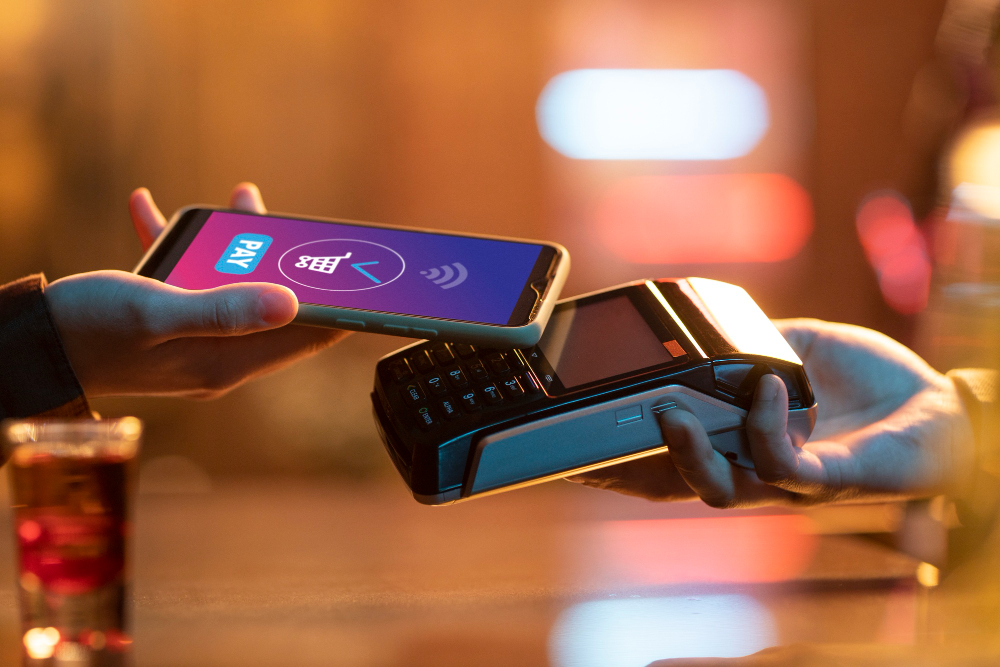
Since the Covid pandemic, NFC-enabled cards and mobile wallets have surged in popularity, turning the simple tap of a card into a daily habit.
Though it seems trivial, this quick gesture profoundly shapes how we spend, make choices, and view the value of money.
Behavioral science helps explain this by examining how our mental and social contexts influence financial decision-making.
Decoding the Psychology of “Invisible Money”
One important concept in behavioral economics is the “pain of paying”, which refers to the emotional discomfort we experience when we part with money.
For example, paying with cash creates a more vivid sense of loss: handing over a $50 bill and receiving change makes the expense feel tangible and real.
Using credit cards has already reduced this discomfort by introducing a delay between the purchase and when the payment is actually deducted from your account.
Contactless payments take this even further: you don’t need to insert your card or type in a PIN to complete the transaction.
The payment is processed immediately and almost without notice, which reduces our conscious recognition of spending.
The quickness and simplicity of the payment make spending feel lighter, detached from any emotional burden.
Money shifts from being a tangible object to just a sound, a small light, or a notification popping up on your phone.
Convenience as a Behavioral Influence
Convenience plays a major role in U.S. culture, visible everywhere from fast food outlets to Amazon and many other companies.
Yet, this ease carries a deeper psychological impact: as the delay between desire and fulfillment shrinks, impulsive spending often rises.
The Cycle of “Tap, Pay, Repeat”
This ongoing loop forms a nearly automatic habit. A customer walks into a shop, selects products, taps their card or phone, and then leaves.
There’s no break for thought, no hesitation, and no clear sense of money leaving one’s account.
This spontaneous behavior is reinforced by instant benefits: swift payments, low effort, and often rewards programs tied to platforms like Apple Pay, Google Pay, or certain retailers.
As a result, spending becomes associated with positive feelings almost beneath conscious awareness.
In behavioral psychology, this effect is called “operant conditioning,” where behaviors followed by quick rewards are more likely to be repeated frequently.
Financial and Social Impacts
Though contactless payments offer obvious advantages like speed, hygiene, and ease, they also introduce financial risks.
Studies from American banks indicate that frequent users of digital payments often carry higher levels of credit card debt.
This shift also changes our sense of value; when purchases require just a tap, spending $5 or $50 can feel nearly identical.
From a social perspective, the rise of tap-to-pay can deepen existing inequalities, since not everyone across the U.S. owns NFC-enabled cards or smartphones that support contactless payments.
To combat exclusion, some states like New Jersey and Massachusetts have passed laws requiring stores to accept cash, ensuring that all customers can make purchases.
Looking Ahead: The Evolution of Contactless Payments
As technology progresses, the need to “tap” may disappear altogether. For example, Amazon is testing biometric systems like palm scanning at select Whole Foods stores.
This could lead to an even smoother shopping experience where customers simply enter, pick up items, and leave—while payments are processed automatically behind the scenes.
Since tap-to-pay has already reduced the “pain of paying,” eliminating the need for any physical action might almost erase that discomfort entirely.
This points to a trend of even more automatic spending, where tracking expenses and managing budgets could become less immediate and more detached.
Should We Continue Using Tap-to-Pay?
Using a card or smartphone to tap and pay might feel like just a small part of modern life.
Yet, this simple gesture marks a profound psychological and cultural transformation.
In the U.S., tap-to-pay is more than a technological breakthrough: it embodies an unwavering drive for ease and speed, while also raising fresh financial and societal challenges.
Behavioral science studies show that every beep from a payment terminal influences us — it helps form habits, encourages spending patterns, and reshapes how we value money.

Related content
Top Apps for Learning Finance
Discover how new apps simplify teaching kids about money and finances. Explore further.nn
Keep reading * You will be directed to an external website